Disadvantages and Risks of Dental Implants: Are They Worth It Anyway?
If you are considering replacing a missing tooth, you surely have several questions and concerns in mind. This is completely normal; any medical procedure, no matter how simple, carries a slight percentage of risk, and dental implants are no exception.
The reassuring news is that the success rate of dental implants exceeds 95%, making it one of the safest medical solutions available today. However, at Innova Clinic, we believe that patients have the right to know exactly what to expect. Therefore, we will discuss all the disadvantages and potential risks of dental implants, especially since many people search for phrases like "my experience with dental implants" before taking the step, only to be surprised by unexpected outcomes later.
Non-Medical Disadvantages of Dental Implants
Dental implants are a highly effective solution for replacing missing teeth. Yet, like any medical procedure, they have aspects that should be taken into account before making a decision. The most prominent disadvantages include
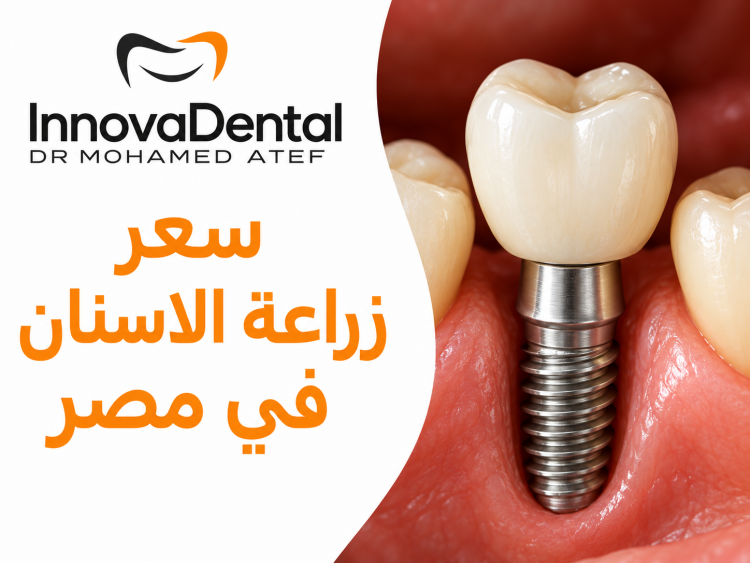
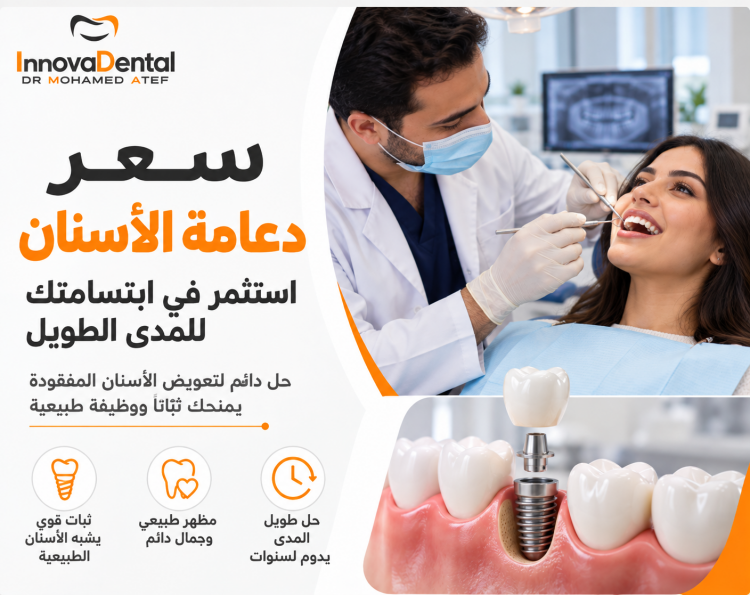
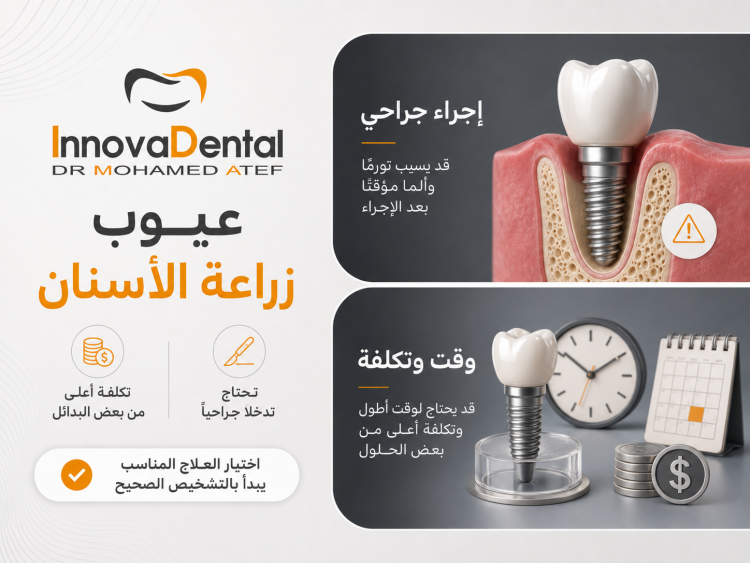
1. High Financial Cost If you compare dental implants to other solutions like bridges or removable dentures, you will find they are indeed the most expensive. The price of a single implant starts from 4,000 EGP, and this number may increase depending on your specific condition and the techniques used.
However, from another perspective, a bridge or denture requires periodic renewal or replacement. An implant, on the other hand, is a lifelong investment if you care for it properly. This means the initial high cost actually translates into a more economical choice in the long run.
2. Long Treatment Duration The second drawback is the length of the implant process. Unlike a bridge or a denture that can be completed in one or two sessions, an implant requires several months to fully integrate with the jawbone and stabilize.
The bright side is that modern solutions can significantly shorten this journey. One such solution is Immediate Dental Implants, which allows for tooth placement in a much shorter timeframe. Despite some drawbacks associated with immediate loading—as is the case with most medical procedures—it remains an excellent alternative for certain cases.

Surgical Risks and Complications
What worries some patients isn't just the logistical disadvantages, but the potential surgical risks and complications. We must point out that these risks are rare and can be entirely avoided when relying on a specialized medical center like Innova. These risks include:
In this context, the global medical website WebMD confirms in its reports on dental implants that the complications of this surgery are very low and rare, and that the vast majority of minor problems that may arise can be easily treated and controlled by a specialist dentist, so that the success rates of implant survival for life reach impressive rates, provided that it is well cared for.
1. Risk of Infection and Inflammation at the Implant Site In some cases, inflammation can occur in the gums or the bone surrounding the implant. If neglected, it may lead to the loss of the implant itself. This inflammation does not happen out of nowhere; it has clear, controllable causes, such as:
- Bacterial infection during or after surgery, often resulting from poor sterilization.
- Neglecting oral hygiene during the recovery period.
- Excessive smoking.
- The body rejecting the implant or an allergic reaction to the titanium used.
2. Nerve Damage If the implant is placed in an inappropriate position, it can damage nearby nerves, resulting in numbness or tingling in the jaw, lips, or tongue. This problem can be easily avoided by:
- Relying on a highly skilled doctor and a top-tier specialized medical center.
- Using 3D CBCT scans prior to the surgery so the doctor can precisely locate the nerves and place the implant at a safe distance.
3. Sinus Problems If upper jaw implants are placed inaccurately, the implant may penetrate the sinus cavity, leading to chronic infections. A specialized doctor easily handles this by performing a Sinus Lift, which creates sufficient space and bone density to place the implant safely.
Beware of Confusion: Normal Side Effects vs. Implant Failure
After exploring the disadvantages, it is crucial to differentiate between the natural side effects of surgery and actual implant failure.
Dental implant surgeries are generally highly successful without serious complications. However, as a surgical procedure, it may be accompanied by minor side effects, especially if post-operative instructions are not strictly followed. Symptoms that typically resolve within days to a week include:
- Minor facial bruising on the operated side.
- Swelling in the face and gums at the implant site.
- Mild pain at the surgical site.
- Slight gum inflammation.
- Minor bleeding.
(If you are wondering if dental implants are painful, the post-op pain is entirely tolerable and responds well to standard painkillers prescribed by your doctor

Symptoms indicating potential implant failure that require an immediate doctor's visit include:
- Severe, deep pain that does not respond to painkillers and lasts long after the procedure.
- Gum recession around the implant (the crown appears abnormally long, or there is a visible gap with localized inflammation).
- Noticeable difficulty chewing or biting, even though the implant should function exactly like a natural tooth.
- Continuous swelling, severe gum irritation, and intense pain.
- Implant loosening or feeling it shift when speaking, eating, or touching it.
Can Diabetics and Smokers Get Dental Implants? (Special Cases)
Many patients mistakenly believe that diabetes or smoking makes dental implants impossible. At Innova Clinic, the reality is quite the opposite. We welcome these patients and create customized treatment plans to ensure success
Dental Implants for Diabetics This is done under strict medical guidelines, including:
- Controlling blood sugar levels before the procedure and taking necessary tests (daily blood sugar and HbA1c).
- Accurately disclosing your full medical history to the doctor.
- Refraining from smoking before and after the surgery, as it elevates blood sugar levels.
- Adhering strictly to a prescribed antibiotic protocol to prevent infections and accelerate healing.
- Following the doctor's instructions meticulously.
- Visiting the clinic every 3 to 6 months for routine check-ups.
- Maintaining rigorous daily oral hygiene to protect the gums.
Dental Implants for Smokers Smoking is not an absolute barrier to implants, though it slows healing and increases the risk of failure. A smoker can undergo the procedure successfully by following a clear recovery plan, which includes:
- Stopping smoking for 2 to 4 weeks prior to surgery to improve blood flow to the gums.
- Abstaining from smoking for 2 to 3 months post-surgery to allow optimal bone and tissue integration.
Implants in Cases of Osteoporosis or Jaw Bone Loss Lack of bone density can lead to implant failure. At Innova Center, we offer advanced solutions, most notably Bone Grafting, to build a strong foundation for the implant. We also utilize specific techniques and implant types that do not require high bone density
How to Completely Avoid the Risks of Dental Implants?
The risks of dental implants can be easily avoided by committing to two vital elements: choosing the right doctor and strictly adhering to post-operative care
Always choose a specialized center equipped with modern technology like 3D CBCT scans. After the surgery, you must follow these tips:
- Avoid hot food and beverages in the first few days to prevent irritating the surgical site.
- Stick to soft foods to avoid putting pressure on the new implant.
- Consume calcium-rich foods (like milk, yogurt, and broccoli) to boost bone tissue healing.
- Avoid strenuous sports for 2 to 3 days to minimize swelling and pressure in the mouth.
- Floss your teeth at least once a day.
- Quit smoking.
Common Myths About Dental Implant Damages (Don't Believe Them!)
:As with any surgical procedure, several myths have surfaced regarding dental implants
- "Do dental implants cause cancer?" No. There is absolutely no scientific evidence linking dental implants to cancer.
- "Do implants cause bad breath?" This is also false. If bad breath occurs, it is due to poor oral hygiene and plaque buildup, not the implant itself.
Conclusion
Ultimately, the disadvantages of dental implants have plenty of reliable solutions. Do not let fearful statements stop you from making the right decision; the knowledge you've gained here is your first step toward peace of mind.
At Innova Dental Clinic, we combine extensive experience, cutting-edge equipment, and personalized treatment plans to guarantee a safe experience and long-lasting results. Book your consultation today, let us evaluate your case, and answer all your questions
In this context, medical reports published on the Mayo Clinic website confirm that dental implant surgery, like any other surgery, carries some health risks. However, these problems are usually rare, and if they do occur, they are simple and easily treated if the procedure is performed under the supervision of a specialist doctor with full adherence to aftercare instructions.