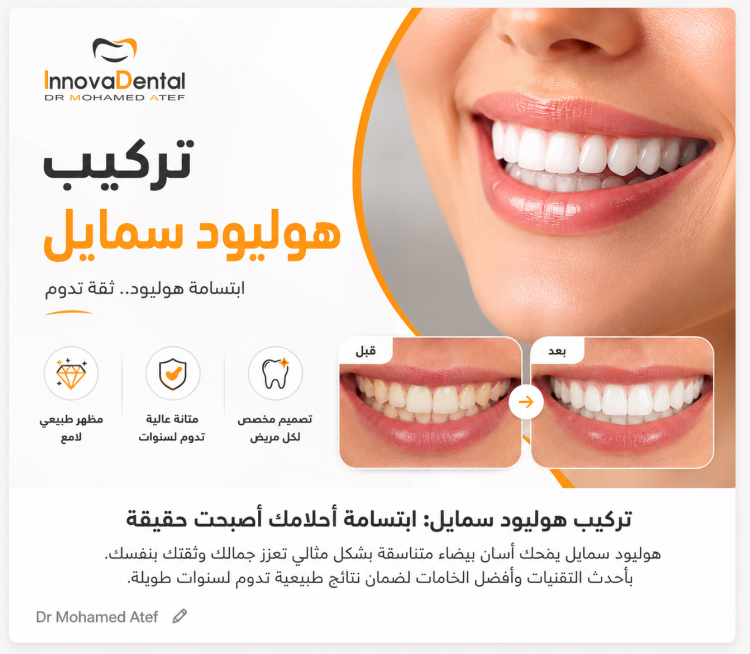
One of the most popular modern cosmetic dentistry solutions used to achieve a brighter and more harmonious smile is the hollywood smile procedure. Especially in cases of tooth discoloration, differences in size and shape, and even minor imperfections that affect the appearance of the smile, all contribute to the high demand for this service.
This service relies on the use of thin cosmetic veneers designed to match the shape of the teeth and facial features, aiming to improve the color, shape, and overall aesthetic harmony. But is a hollywood smile procedure suitable for everyone? What types are available, and how much does it cost? In this article, we'll cover everything you need to know about this transformative dental treatment.
Clinical Definition and Overview of the Hollywood Smile Procedure
It is a cosmetic prosthodontic procedure that involves placing thin custom-made veneers, usually crafted from high-quality porcelain, on the anterior surface of the teeth to improve their color, shape, and alignment. This differs significantly from traditional teeth whitening, which only lightens the natural shade of the dentin. The hollywood smile procedure can completely mask deep staining and correct minor structural defects. As for the difference between a Hollywood Smile and veneers, there is practically no functional difference; a veneer is the specific type of cosmetic restoration used, while the term "Hollywood Smile" usually refers to the comprehensive treatment plan and the final aesthetic result.
Clinical Indications for a Hollywood Smile Procedure
Undergoing a hollywood smile procedure is a suitable clinical option if you want to comprehensively improve the appearance of your teeth and eliminate cosmetic imperfections that compromise your smile's aesthetics, especially when conservative treatments like bleaching are insufficient. Some of the most prominent clinical situations where you might benefit from it include:
- Masking Deep Pigmentation: Cosmetic price of veneers effectively conceal intrinsic stains and pigmentation that do not respond to traditional chemical whitening methods.
- Closing Diastemas (Tooth Gaps): This treatment can help eliminate the appearance of small gaps, giving the dental arch a more uniform and contiguous appearance.
- Correcting Microdontia and Asymmetry: If some of your teeth are disproportionately small or asymmetrical in shape and size, customized veneers are designed to restore proper symmetry and proportion to your smile.
- Restoring Minor Surface Imperfections: It effectively hides superficial enamel cracks, minor erosion, and structural irregularities.
If you're exploring options for the price of removable snap-on smiles or permanent veneers, be aware that costs fluctuate based on the biomaterials used and the number of units required. Therefore, it's best to explore your options after a comprehensive dental examination. For an accurate clinical assessment, please contact us at Inova Oral and Dental Clinics to book your consultation.
Patient Candidacy and Pre-Procedural Prerequisites
The hollywood smile procedure isn't universally suitable for every patient. It is imperative to have a qualified dental professional evaluate your periodontal and endodontic health before proceeding. Some of the fundamental clinical prerequisites for a safe and successful treatment include:
- Eradication of Active Pathologies: Treating any active dental caries (decay) or gingival inflammation (gingivitis/periodontitis) is mandatory before starting the cosmetic phase to ensure the long-term prognosis of the restorations.
- Absence of Severe Malocclusion: Patients must not have severe orthodontic or skeletal problems that require braces or surgery first.
- Bruxism Assessment: In cases of severe nocturnal teeth grinding (bruxism), porcelain Dental Veneers Before and After may be contraindicated or require a protective occlusal guard, as excessive bite force can cause catastrophic ceramic fractures.
- Realistic Aesthetic Expectations: Patients must undergo a thorough smile design consultation with their prosthodontist to select an appropriate tooth morphology and shade.
Your clinical experience with removable or permanent solutions will vary depending on your baseline dental health. Understanding potential risks, such as transient dentinal hypersensitivity or mechanical failure due to misuse, ensures a fully informed clinical decision.

Prosthodontic Options: Veneer Modalities in the Hollywood Smile Procedure
When selecting materials for your smile makeover, you will be presented with different clinical options, primarily traditional Porcelain Veneers and ultra-thin Lumineers. The optimum choice depends on your enamel thickness, the severity of discoloration, and the desired aesthetic outcome.
|
Material Type |
Clinical Advantages |
Clinical Limitations |
|
Traditional Porcelain Veneers |
Provides excellent morphological and chromatic consistency; highly effective at masking severe intrinsic discoloration and structural defects. |
Typically requires the irreversible reduction (filing) of a superficial layer of tooth enamel to accommodate the ceramic thickness. |
|
Lumineers (Ultra-Thin Lenses) |
Extremely thin and highly translucent; often categorized as a "prep-less" or minimal-preparation option, preserving natural tooth structure. |
May be contraindicated for severe tetracycline staining or cases requiring significant morphological alterations due to high translucency. |
There is no universal "best" material; your attending dentist will determine the most appropriate restorative modality after conducting a comprehensive clinical and radiographic examination.
In this context, the website indicatesWebMDThe international medical community has confirmed that the simple preparation or superficial "tooth filing" procedure (enamel removal) before applying veneers is a routine and completely safe procedure. Reports published on the website emphasize that removing a very small portion of the tooth enamel (less than half a millimeter) is essential to ensure that the veneers do not protrude unnaturally and to provide a surface that allows the cosmetic materials to adhere firmly and securely. This ensures your smile lasts for many years without negatively affecting the nerve or the internal health of the tooth.
Clinical Protocols: Step-by-Step Hollywood Smile Procedure
The specific workflow involved in getting a Hollywood Smile varies slightly depending on your diagnosis and the chosen restorative material. However, the Hollywood Smile Price procedure generally adheres to standardized clinical protocols across professional practices. These critical stages are:
- Initial Consultation, Diagnostic Wax-up, and Impressions: The dentist evaluates your oral health, resolves any underlying pathologies, and takes digital or physical impressions. These records are used to create a 3D smile design tailored to your facial proportions.
- Tooth Preparation and Provisionalization: If the selected veneer requires mechanical retention and space, the dentist performs minimal enamel reduction. Afterward, temporary (provisional) acrylic veneers are bonded to protect the prepared teeth and prevent sensitivity while the permanent ceramics are fabricated.
- Final Cementation and Occlusal Adjustment: During the delivery appointment, the dentist tries in the definitive restorations to verify marginal fit, shade, and contact points. Once approved, they are permanently bonded using specialized resin cements, followed by a final occlusal check to ensure a balanced bite.
For patients seeking premium care, Inova Clinics offers an optimal balance of advanced clinical expertise and high-quality biomaterials. To schedule your diagnostic appointment, contact our clinic at (01016188222).
Enamel Reduction and Dental Preparation Methods
Does getting a hollywood smile procedure strictly require filing down the teeth?
The requirement for tooth preparation is heavily dependent on the clinical indication and the specific biomaterial used. Standard porcelain veneers typically require the removal of a microscopic layer of enamel (around 0.3 to 0.5 mm) to provide adequate space for the ceramic, preventing a bulky, unnatural appearance. Conversely, ultra-thin variants like Lumineers may require zero to minimal preparation. It is critical to discuss tissue-conserving options with your dentist to preserve maximum healthy tooth structure.
The Mayo Clinic and global dental boards confirm that conservative enamel reduction prior to veneer cementation is a routine, clinically safe protocol. This micro-abrasion is essential for creating a micromechanical retentive surface that allows the bonding agents to adhere firmly. When performed correctly by a specialist, this process ensures the longevity of the restoration without compromising the underlying dental pulp (nerve) or the tooth's vitality.
Financial Considerations and Economic Variables of the Hollywood Smile Procedure

- Number of Restorative Units: Treating only the "social six" (front teeth) carries a different financial weight than a full-arch maxillary and mandibular rehabilitation.
- Choice of Biomaterials: Premium ceramics like IPS e.max (Lithium Disilicate) or Zirconia command different laboratory fees compared to standard composites.
- Clinician's Expertise: Fees reflect the prosthodontist's or cosmetic dentist's level of specialized training, technical precision, and clinical success rates.
- Preparatory Endodontic/Periodontal Therapy: Any required root canals, gingivoplasty (gum contouring), or caries excavations prior to veneer placement will be added to the comprehensive treatment plan.
- Dental Laboratory Standards: The artistic skill of the master ceramist and the technological capabilities of the dental lab directly impact both the aesthetics and the final cost.
When researching prices—whether for permanent ceramics or removable appliances in Egypt or Algeria—prioritize clinical quality over the lowest bid. A comprehensive physical examination is the only way to generate an accurate and individualized treatment estimate.
Post-Procedural Care and Long-Term Maintenance
To maximize the clinical longevity of your hollywood smile procedure, strict adherence to a dedicated oral hygiene regimen and the modification of destructive habits are mandatory.
Routine Oral Hygiene Protocols
- Non-Abrasive Brushing: Brush gently at least twice daily using a soft-bristled toothbrush and a non-abrasive fluoride toothpaste to prevent scratching the ceramic glaze.
- Interdental Cleaning: Daily flossing is non-negotiable to remove plaque biofilm from the margins where the veneer meets the natural tooth, preventing secondary decay and periodontal disease.
- Periodontal Monitoring: Never ignore gingival bleeding, swelling, or localized pain, as these are clinical signs of inflammation that require immediate professional intervention.
- Professional Prophylaxis: Schedule biannual dental cleanings and examinations to monitor the marginal integrity of the restorations.
Parafunctional Habits to Avoid
- Onychophagia (Nail Biting): Chronic localized stress can lead to micro-fractures in the porcelain.
- Mechanical Abuse: Never use your teeth as tools to open packages or tear materials; this applies catastrophic shearing forces to the bonding interface.
- Masticating Hard Objects: Chewing ice, pens, or hard candies can cause acute ceramic chipping.
- Managing Bruxism: If you are diagnosed with sleep bruxism, wearing a custom-fabricated occlusal splint (night guard) is absolutely critical to protect the restorations from extreme grinding forces.
If you experience persistent thermal sensitivity, altered occlusion, or notice a debonded veneer, seek immediate clinical care rather than attempting home repairs.
If you are ready for a professional evaluation, book your diagnostic consultation at Innova Dental Clinics by calling 01016188222 to discuss your tailored treatment plan